 Date: 9 January 2026
Mortgage affordability is not just a quick calculator number. It is the lender’s view of what you can comfortably repay each month, based on your income, outgoings, and a safety margin if rates or circumstances change.
This guide is written from an accountant’s perspective, because tidy records and a clear story behind your numbers can make the mortgage process smoother. For wider accounting support, visit Henry & Banwell accountants in Bristol. For mortgage advice and support, speak to MDJ Mortgages. MDJ is based in Basingstoke, Hampshire, but the principles below apply UK-wide.
Affordability is the lender’s way of asking one simple question: if we lend you this amount, can you repay it without it putting you under strain?
Some borrowers focus on the interest rate or the maximum loan size. In practice, the lender is looking at the full monthly picture and how stable it is. MoneyHelper explains that lenders assess affordability by looking at both your income and your outgoings, and they will ask for evidence such as payslips and bank statements.
If you are paid a standard salary, the first part of the story can be straightforward. But many buyers have income that shifts month to month. That might be overtime, commission, bonus pay, or secondary income.
From an accountant’s point of view, the key is consistency and evidence. If income varies, you want to show a sensible average and avoid surprises in your paperwork.
Two borrowers can earn the same salary and have very different borrowing potential.
A loan repayment, credit card balance, childcare cost, or car finance agreement reduces the amount of “spare” monthly money a lender can rely on.
Lenders tend to focus on commitments rather than judging every coffee purchase. Still, the overall pattern matters. If spending spikes, accounts dip into overdraft, or gambling appears, the lender may ask questions.
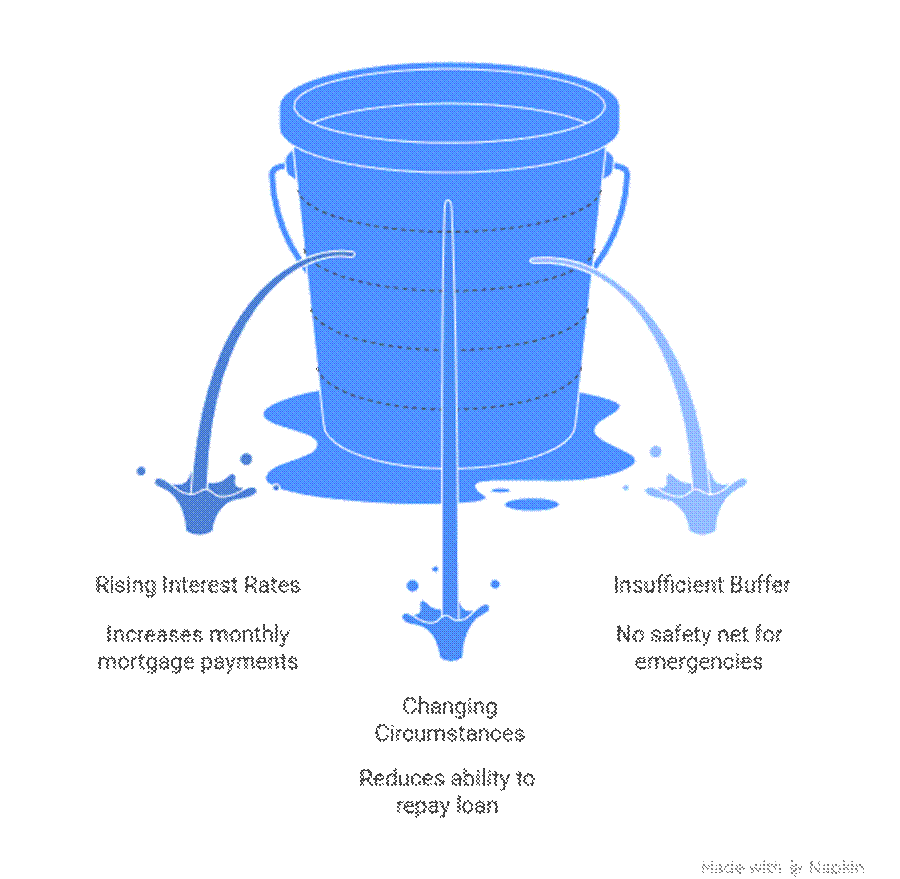
Even if you can afford the payment today, a lender also wants comfort that you could cope if interest rates moved up.
The FCA’s interest rate stress test rule explains that lenders must take into account the impact of likely future interest rate increases on affordability for a minimum of five years in many cases.
That does not mean your payment will definitely rise. It means lenders test whether your budget could handle a tougher scenario.
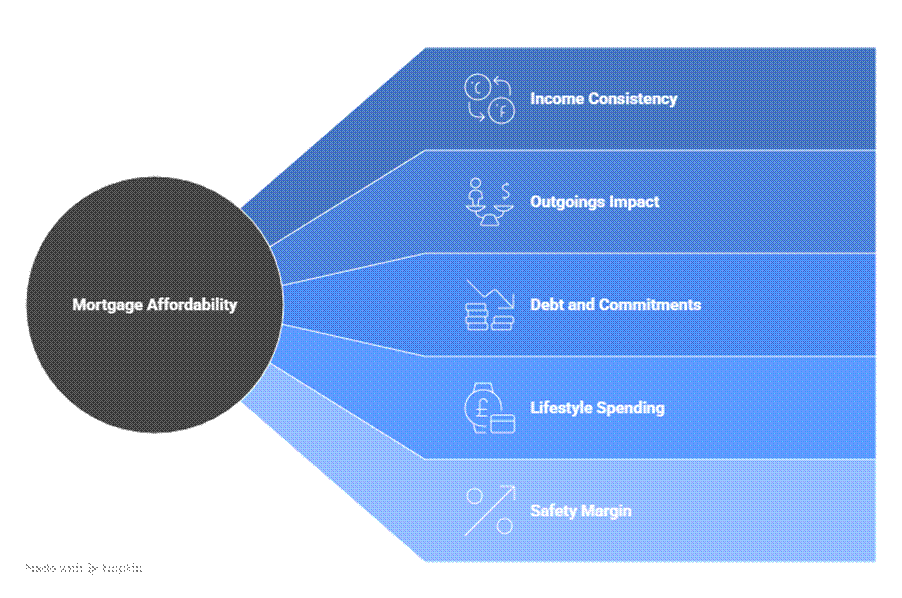
If you want to improve outcomes, start by presenting your income clearly. The goal is not to inflate it. The goal is to make it easy for a lender to understand and verify. For many buyers, mortgage affordability is won or lost on how clearly this evidence stacks up.
PAYE stands for Pay As You Earn, which is the UK system where income tax and National Insurance are deducted from your salary by your employer before you are paid. Most PAYE mortgage applications are built around three pieces of evidence.
Lenders usually want recent payslips, and they will look for consistency. If your payslip shows variable pay, be ready to explain it.
A P60 is an annual summary of your pay and tax provided by your employer at the end of each tax year. It helps show total earnings and stability over time, and allows a lender to sense-check that your payslips reflect your usual pay rather than a one-off month.
The bank statement evidence should broadly match your payslips. If your payslips show a salary but the bank shows different amounts, it creates questions. Sometimes that is completely explainable, for example, salary sacrifice or a change in payday. The point is to spot it before a lender does.
Self-employed borrowers and directors can borrow successfully, but the paperwork tends to be more detailed. If you are applying with fewer trading periods, MDJ’s guide Decoding Self Employed Mortgage with 1 Year Accounts explains what lenders often look for and how to prepare.
A lender usually wants accounts and tax evidence. The exact combination varies, but the underlying goal is the same: prove income is real, sustainable, and repeatable.
From an accountant’s perspective, this is where a lot of affordability stress starts. If personal spending runs through the business account, or business costs run through personal cards, the numbers become harder to explain.
If you are planning to apply in the next few months, a simple cleanup helps.
Life happens. People change jobs, take parental leave, or return from a break.
In these situations, the best approach is calm clarity.
A short explanation paired with the right documents is often enough.
If you have started a new job, a contract and early payslips can help. If your income will be reduced temporarily, show how your budget still works.
Borrowers often focus on income and deposit, then get surprised by how much outgoings affect the result. From an accountant’s viewpoint, outgoings are where the “story” of your numbers is either clear or messy.
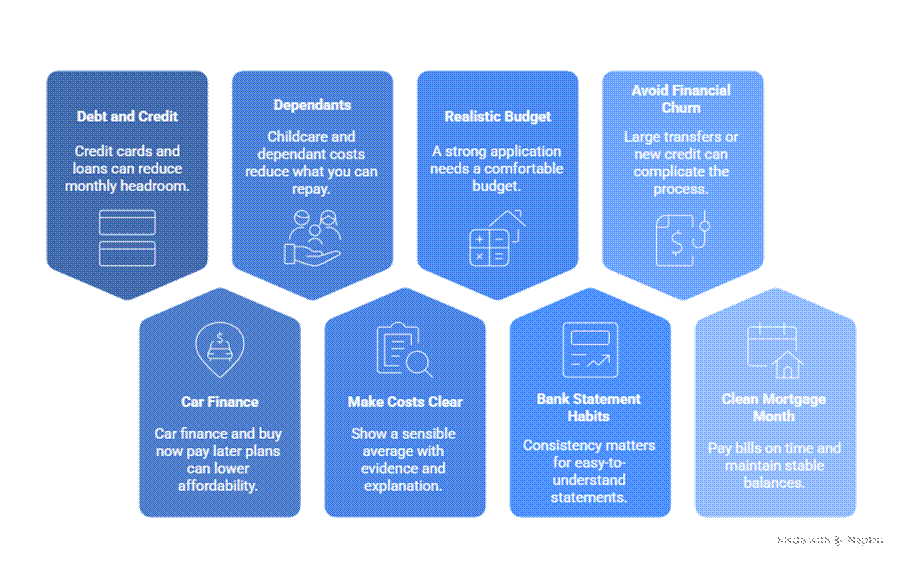
Credit cards and loans are not automatically a problem. But balances and minimum payments reduce monthly headroom.
Car finance payments are a common affordability drag. Buy now, pay later commitments can also appear.
A practical step is to list every monthly payment and total it. Many people forget one or two.
They also consider whether you have dependants (children or other people who rely on you financially), as this can increase regular household costs and reduce what you can comfortably repay.
Make the cost clear
If the cost varies, show a sensible average and keep evidence. A short note explaining why it changed can also help if a lender asks questions later.
Affordability is not just about passing the lender’s test. It is about whether you will still feel comfortable paying the mortgage while living your life.
This is not about hiding spending. It is about being consistent and understandable.
If you move large sums around, take new credit, or close accounts right before applying, it can make the paper trail harder to follow.
A simple tactic is to keep the months before your application steady. Pay bills on time and keep balances stable, so your statements are consistent and easy to understand.
Deposit, loan-to-value, and term length are linked. Change one, and the other two often shift.
A larger deposit can open more product options and reduce the lender’s risk.
From an affordability angle, it can also reduce the monthly payment, which makes the budget easier to stress test.
A longer term can reduce the monthly payment, which can improve affordability. But it can also increase the total interest paid.
From an accountant’s perspective, this is a cash flow versus long-term cost decision. If the longer term makes the payment comfortable and sustainable, it can be sensible. Many borrowers then overpay later if their circumstances improve.
No deposit options are growing in visibility, but they come with extra scrutiny. If you are borrowing a high percentage of the property value, the lender needs comfort that the monthly payment is still manageable and that you can cope if circumstances change.
For buyers, the practical preparation is the same: stable income evidence, clear outgoings, and a realistic buffer.
You do not need a perfect credit file. You need a clean and accurate one.
A missed payment is a red flag because it suggests instability. If you have historic issues, be ready to explain them and show improvement.
Errors happen, and small mistakes can matter. Check addresses, payment markers, and account statuses are correct so lenders see an accurate and consistent credit history.
Being on the electoral roll at your current address helps show stability and consistency, which can support lender confidence when assessing identity, address history, and overall risk.
Simple, steady behaviour matters most during an application window. Consistency makes your financial position easier for lenders to understand and assess.
Late payments raise red flags. Setting up direct debits helps ensure bills are paid on time and shows reliable money management to lenders.
Long-standing accounts show stability and responsible credit use. Closing them without a clear reason can shorten your credit history and remove positive signals.
Affordability can change even if your salary has not. That is because lender criteria and stress testing assumptions can shift.
Lenders are trying to reduce the risk of borrowers becoming stretched later. If interest rates rise, or your circumstances change, they want confidence that you can still pay.
Build your own buffer, even if the lender does not demand it. If you can still afford the payment with a higher rate assumption in your own budget, you sleep better.
There is no magic trick that makes a lender ignore the facts. But there are sensible steps that improve clarity and reduce avoidable affordability friction. In simple terms, improving mortgage affordability usually comes down to reducing monthly commitments and building a stronger buffer.
Start with the obvious fixed costs. Credit cards, loans, car finance, subscriptions, and any regular payments all reduce how much monthly headroom a lender can rely on. Small reductions can have a bigger effect than people expect because they improve your budget every single month.
Two people can owe the same amount, but appear different on paper depending on how close they are to their card limits. Bringing utilisation down can make your profile look less stretched and can also reduce minimum payments.
New credit can add a fresh commitment and change what a lender sees. If you are close to applying, keep things steady. If you genuinely need finance, speak to your broker first, so you do not create surprises.
A practical exercise is to “pay the mortgage to yourself” for a short period. Put the difference between your current housing cost and the expected mortgage payment into savings. It is a simple way to test comfort and build a cushion.
If you are about to move house, change jobs, repay a loan, or adjust major household costs, think about timing. Sometimes waiting a little can make the application story clearer. A quick conversation with a broker can help you decide what to do first.
A couple were planning to move home. One was PAYE with a stable income. The other was self-employed with fluctuating monthly revenue.
They assumed their combined income would be enough, but their initial estimates came back lower than expected. The issue was not that income was missing. It was that the self-employed income was harder to evidence cleanly, and their outgoings looked higher than they felt because of credit utilisation and a few older commitments.
We focused on clarity and cash flow. They gathered the right documents, cleaned up missing items, and prepared a simple income summary that matched the evidence. They then reduced credit card balances to bring utilisation down, removed a couple of unused subscriptions, and stress tested their own budget by setting aside the difference between rent and the expected mortgage payment for a short period.
Their application story became clearer and easier for a lender to follow. The lender could see stable PAYE income, a sensible view of self-employed earnings, and a cleaner monthly commitments picture, which supported a more comfortable affordability position.
Local knowledge can help, even in a UK-wide market.
Basingstoke and Hampshire buyers often balance commuting patterns with housing choices, and that can shape monthly costs. A broker who understands the local context can help turn the affordability numbers into realistic options, whether you are buying for the first time, moving home, or remortgaging. If you are a first-time buyer preparing for viewings, MDJ’s First-time Buyer House Viewing Checklist is a useful, practical guide.
Make sure payslips, P60s, bank statements, and self-employed evidence are easy to access and consistent.
Write down every monthly payment, including credit, finance, and childcare, and check what will still apply after you move.
Look for missed payments, errors, and high utilisation, and fix what you can well before you apply.
Check your budget still works if costs rise, and leave headroom each month so the payment still feels comfortable.
A broker can help match your numbers to lender criteria and reduce wasted applications. If you are weighing up whether it is worth using one, MDJ’s blog about Why Use a Mortgage Broker? explains the benefits in plain English.
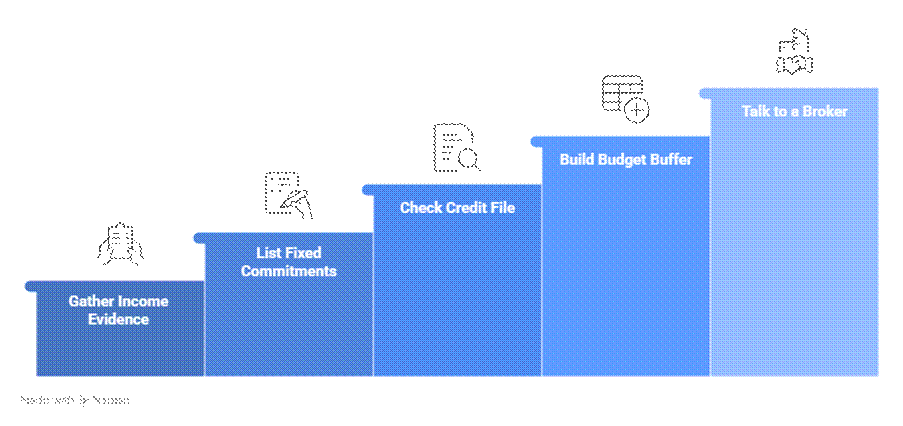
If you treat the application like a simple finance review, you put yourself in a stronger position. Clear income evidence, realistic outgoings, and a calm buffer are what matter most, not headline borrowing figures. Mortgage affordability improves when your numbers are tidy, consistent, and easy for a lender to verify.
Lenders often look for a track record and consistency rather than a single month’s figure. If your pay varies, they may use an average and may discount income that looks irregular. Keep payslips and bank statements consistent and be ready to explain the pattern.
Dividends can form part of your income picture, but lenders typically want to see evidence through accounts and tax documents. The key is showing that income is sustainable and supported by company performance. Keeping business records tidy reduces delays and questions.
It can. Credit card balances can reduce affordability through minimum monthly payments and high utilisation. Reducing balances can improve cash flow and can make your profile look less stretched.
A longer term can lower the monthly payment, which can help you pass affordability checks. But it can also increase the total interest you pay over the life of the mortgage. Many borrowers choose a longer term for comfort and then overpay later when they can.
Avoid making large unexplained transfers or changing income arrangements without a clear reason. Keep payments on time and keep your bank statements steady. If you need to make changes, speak to your broker first so the application story stays clear.
Risk Warnings
Your home may be repossessed if you do not keep up repayments on your mortgage

